


     Oh say, poet, what do you do?

I strive
to praise,
to trust in the kindness of the world.

     But you’ve seen the refugees going nowhere,
     you’ve heard the executioners sing joyfully.
     You know of children raped on city streets,
     shot down in school rooms,
     of slow poisons seeping into our air, soil, water.
     You know the deadly and the monstrous.

I praise the mutilated world.
I remember the white room and the curtains fluttering.
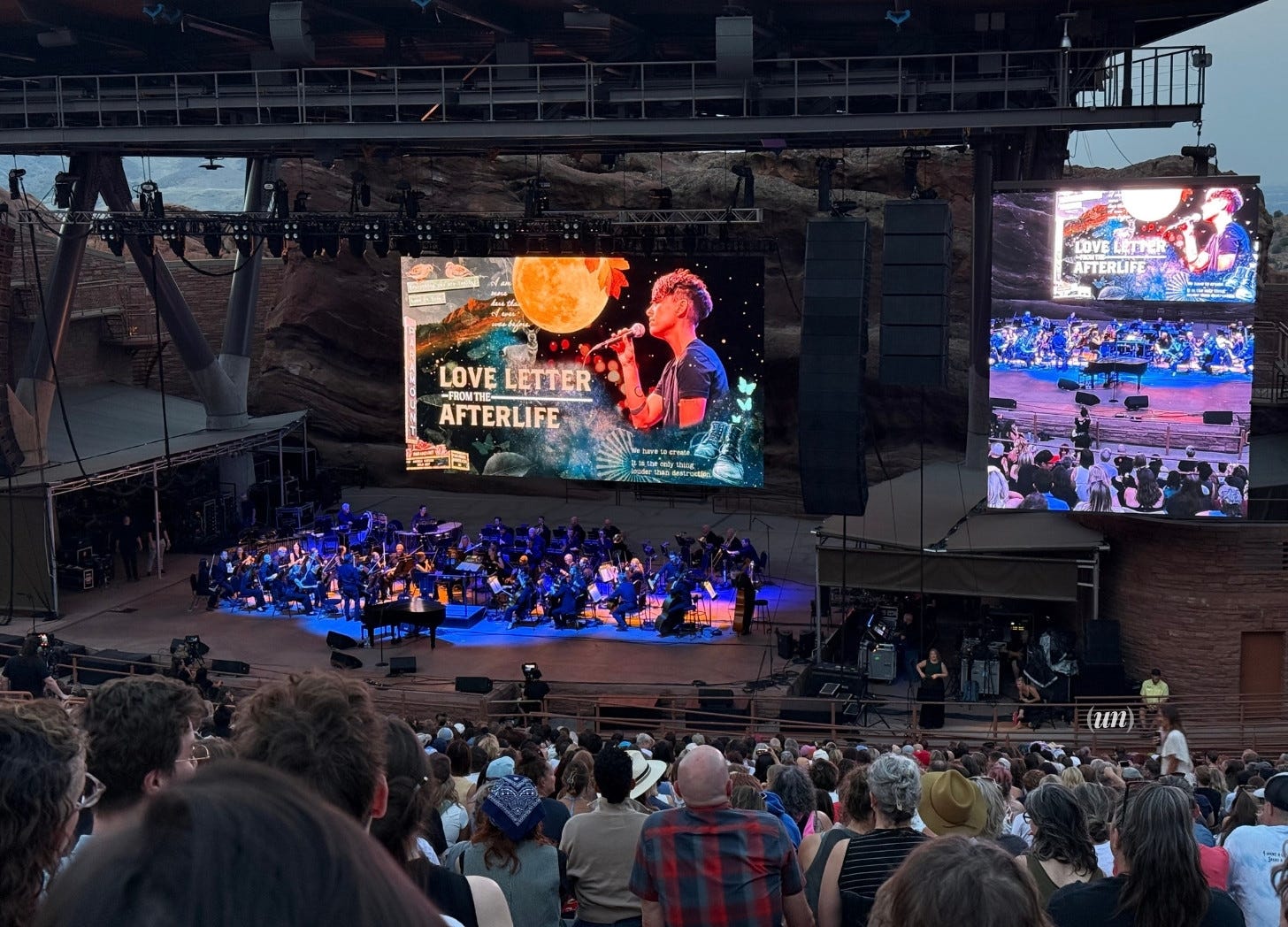
I return in thought to the concert where music flared.

No antidote,
but oh, this tenderness,
the love that fuels the ache.

Beauty is in the eye of anyone
who sees what’s missing
but can’t stop pointing to what’s still there.

     But there are names and faces behind our apathy,
     eulogies beneath our choices.
     You know of the livid one
     who even now is hurling names at the other travelers
     on the same paved path.
     For every kind stranger, there is one who would break you.

Mercedes guy has a daughter who loves him.
And MAGA hat man has an angst I recognize.

I still believe we are capable of attention,
that anyone who notices the world
must want to save it.

We’re all late bloomers when it comes to love.

I don’t think kindness is natural.
Kindness is our knees in the garden
weeding our silences, our cruelties,
whatever taught us the word “ugly.”

You could make this place beautiful.

For every day I paint the war,
I take a week and paint the beauty, the color,
the shape of the landscape we’re marching towards.

Only kindness makes sense anymore.
Only kindness sends you out into the day.

	Who are you to be so brave, so strong
	that you can leave it all behind?
	Why do stillness and turbulence
	recognize you like star and storm?

When anyone in this room leaves this world,
part of me does too.
I am not a me.

I can’t believe how many years
I lived without knowing the air you were breathing out
was the air I was breathing in.

Loving the world changed me—
made me more than my fear and sadness,
turned me again toward the miracle.

So, tonight I feel I’m floating
for minutes at a time
just listening to the bells
and trusting in the kindness of the world.
“Trusting in the Kindness of the World” — A cento assembled with gratitude. Passages are keyed below by their opening words and listed in order of appearance. Some have been excerpted, condensed, combined, or lightly adapted.
“Oh say, poet …” — Rainer Maria Rilke, poem beginning “O sage, Dichter, was du tust? — Ich rühme,” trans. Mark S. Burrows, in The Paraclete Poetry Anthology: Selected and New Poems (Paraclete Press, 2016). Rilke’s recurring answer, “I praise,” is echoed in “I strive / to praise.”
“to trust in the kindness of the world” — Joe Henry, “Kindness of the World,” from Kindness of the World (adapted from the refrain).
“But you’ve seen the refugees …” — Adam Zagajewski, “Try to Praise the Mutilated World,” trans. Clare Cavanagh (“But” added).
“You know of children …” — Rebecca Baggett, “Testimony” (condensed and recast).
“You know the deadly and the monstrous” — Rilke, same poem and Burrows translation (adapted).
“I praise the mutilated world …” — Zagajewski, same poem and Cavanagh translation. The imperatives are recast in the first person; “curtain” becomes “curtains.”
“No antidote …” — Rosemerry Wahtola Trommer, “Watching the Goslings,” spliced with “the love that fuels the ache” from Trommer’s “For What Ails Us.” Both poems are from A Hundred Falling Veils and are used with permission of the author. Both passages are condensed; “The medicine is in” is omitted from the second.
“Beauty is in the eye …” — Andrea Gibson, “The Year of No Grudges, or Instead of Writing a Furious Text, I Try a Poem.”
“But there are names and faces …” — Gibson, “See Through” (“But” added).
“You know of the livid one …” — Trommer, “Traveling the Same Road” (adapted), from All the Honey (Samara Press, 2023); used with permission of the author.
“For every kind stranger …” — Maggie Smith, “Good Bones.”
“Mercedes guy …” — Gibson, “MAGA Hat in the Chemo Room” (two passages combined; “I can see it in his eyes” and “inside of him” omitted).
“I still believe …” — Baggett, “Testimony” (introductory “that” omitted).
“We’re all late bloomers …” — Over the Rhine, “All My Favorite People,” from The Long Surrender.
“I don’t think kindness is natural …” — Gibson, Take Me With You (two passages combined; final list condensed).
“You could make this place beautiful” — Smith, “Good Bones.”
“For every day I paint the war …” — Gibson, “Evolution” (pronouns adapted).
“Only kindness makes sense anymore …” — Naomi Shihab Nye, “Kindness” (condensed and recast as two parallel sentences).
“Who are you to be so brave, so strong …” — Henry, “Kindness of the World” (two questions combined; intervening lines omitted).
“Why do stillness and turbulence …” — Rilke, same poem and Burrows translation (syntax adapted).
“When anyone in this room leaves this world …” — Gibson, “MAGA Hat in the Chemo Room” (two passages combined).
“I can’t believe how many years …” — Gibson, “Note to the Stranger Six Feet Away.”
“Loving the world changed me …” — Trommer, “The Turning,” from The Wonderment (Wildhouse Publishing, 2026); used with permission of the author.
“So, tonight I feel I’m floating …” — Henry, “Kindness of the World” (“But tonight” becomes “So, tonight”).
If this resonates, I’d love to hear from you. A comment, a share, or even just a like goes a long way. Writing into the silence is its own practice, but knowing the work lands makes it easier to keep showing up.
I love this, Tim. Thank you.